02 October
2006
Fruchtfliege Schattenriss
Küche
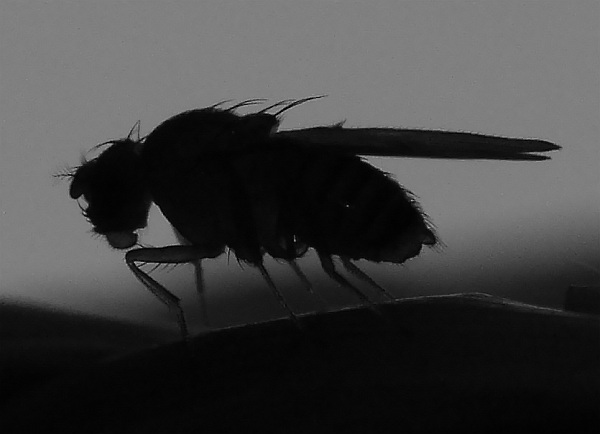
Sabbernde Fliege
Badezimmer

27 September
2006
Großlibelle
Wollmatinger Ried
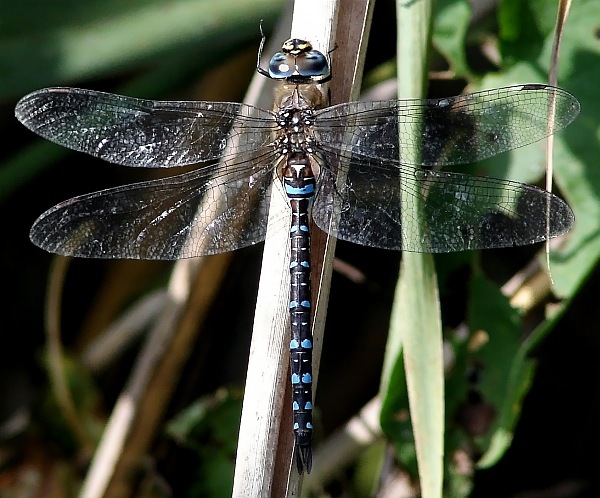
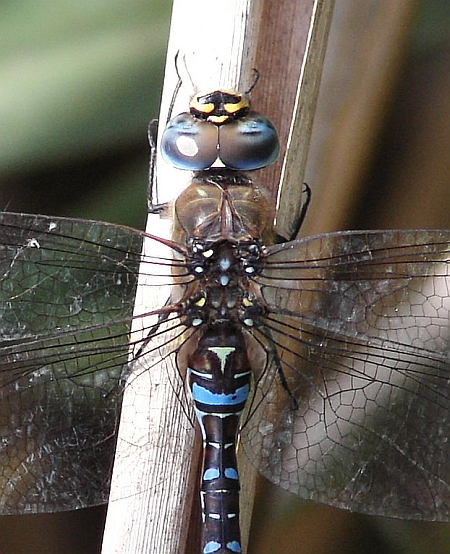

Großlibelle - Edellibelle (Aeshnidae) - Torf-Mosaikjungfer
25 September
2006
Victoria Falls
Livingstone, Zambia
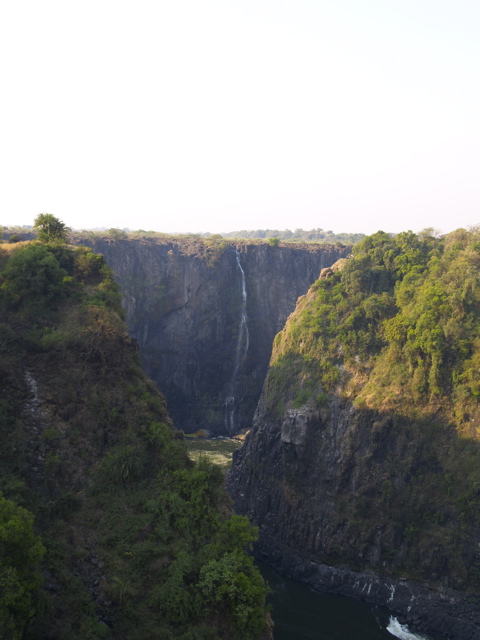
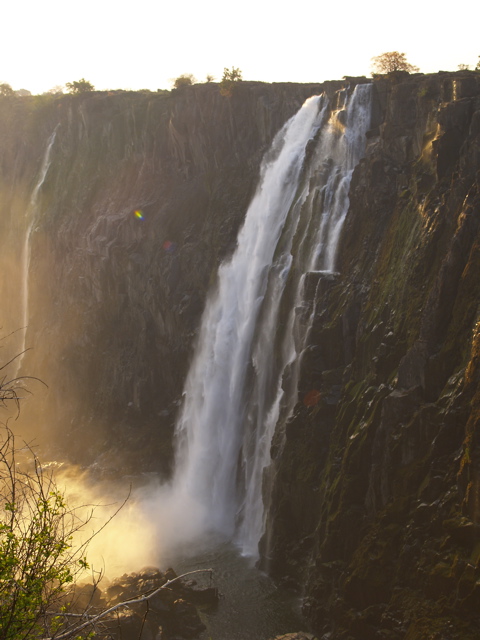
We proceeded next morning, 9th August 1860, to see the Victoria Falls. Mosi-oa-tunya is the Mokololo name, and means smoke sounding; Seongo or Chongwe, meaning the Rainbow, or place of the Rainbow, was the more ancient term they bore.
[...]
It is rather a hopeless task to endeavour to convey an idea of it in words, since, as was remarked on the spot, an accomplished painter, even by a number of views, could but impart a faint impression of the glorious scene. The probable mode of its formation may perhaps help to the conception of its peculiar shape. [...] [T]he Victoria Falls have been formed by a crack right across the river, in the hard, black, basaltic rock which there formed the bed of the Zambesi.
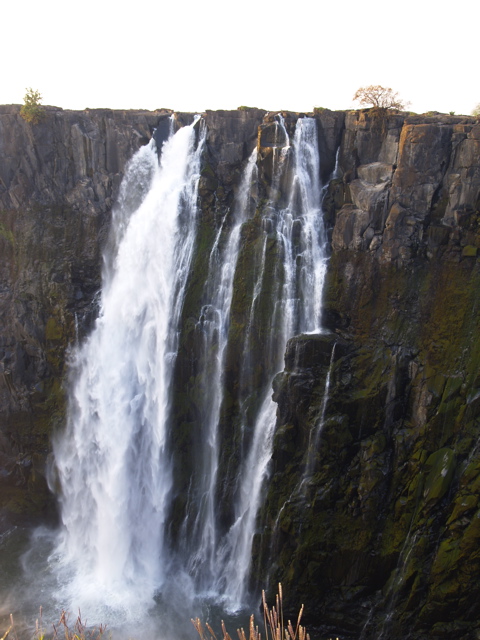
The lips of the crack are still quite sharp, save about three feet of the edge over which the river rolls. The walls go sheer down from the lips without any projecting crag, or symptom of stratification or dislocation. When the mighty rift occurred, no change of level took place in the two beds of the river thus asunder, consequently, in coming down the river to Garden Island, the water suddenly disappears, and we see the opposite side of the cleft, with grass and trees growing where once the river ran, on the same level as that part of its bed on which we sail. The first crack is, in length, a few yards more than the breadth of the Zambesi, which by measurement we found to be a little over 1860 yards, but this number we resolved to retain as indicating the year in which the Fall was for the first time carefully examined.
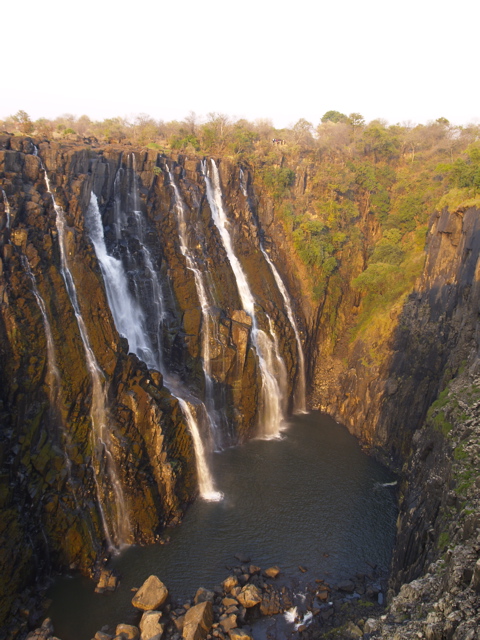
The main stream here runs nearly north and south, and the cleft across it is nearly east and west. The depth of the rift was measured by lowering a line, to the end of which a few bullets and a foot of white cotton cloth were tied. One of us lay with his head on a projecting crag, and watched the descending calico, till, after his companions had paid out 310 feet, the weight rested on a sloping projection, probably 50 feet from the water below, the actual bottom being still further down. The white cloth now appeared the size of a crown-piece. On measuring the width of this deep cleft by sextant, it was found at Garden Island, its narrowest part, to be eighty yards, and at its broadest somewhat more. Into this chasm, of twice the depth of Niagara-fall, the river, a full mile wide, rolls with a deafening roar; and this is Mosi-oa-tunya or the Victoria Falls.
Victoria Falls
Livingstone, Zambia
Looking from Garden Island, down to the bottom of the abyss, nearly half a mile of water, which has fallen over that portion of the Falls to our right, or west of our point of view, is seen collected in a narrow channel twenty or thirty yards wide, and flowing at exactly right angles to its previous course, to our left; while the other half, or that which fell over the eastern portion of the Falls, is seen in the left of the narrow channel below, coming towards our right. Both waters unite midway, in a fearful boiling whirlpool, and find an outlet by a crack situated at right angles to the fissure of the Falls. This outlet is about 1170 yards from the western end of the chasm, and some 600 from its eastern end; the whirlpool is at its commencement.
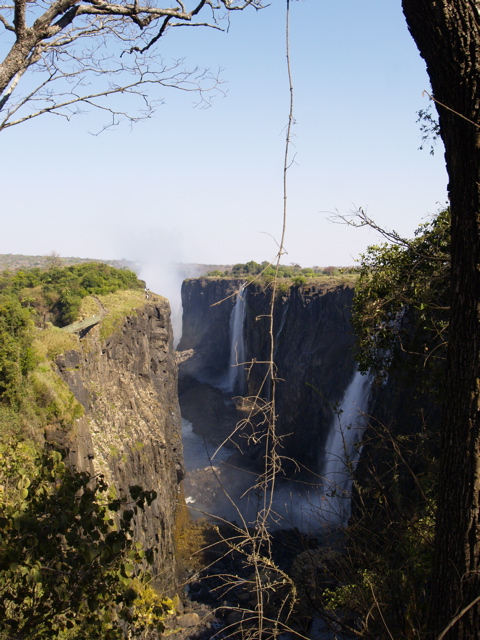
The Zambesi, now apparently not more than twenty or thirty yards wide, rushes and surges south, through the narrow escape-channel for 130 yards; then enters a second chasm somewhat deeper, and nearly parallel with the first. Abandoning the bottom of the eastern half of this second chasm to the growth of large trees, it turns sharply off to the west, and forms a promontory, with the escape-channel at its point, of 1170 yards long, and 416 yards broad at the base. After reaching this base, the river runs abruptly round the head of another promontory, and flows away to the east, in a third chasm; then glides round a third promontory, much narrower than the rest, and away back to the west, in a fourth chasm; and we could see in the distance that it appeared to round still another promontory, and bend once more in another chasm towards the east.
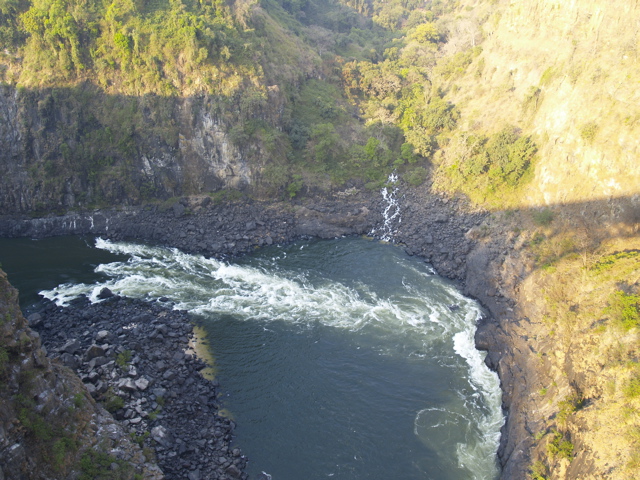
In this gigantic zigzag, yet narrow trough, the rocks are all so sharply cut and angular, that the idea at once arises that the hard basaltic trap must have been riven into its present shape by a force acting from beneath, and that this probably took place, when the ancient inland seas were let off by similar fissures nearer the ocean.
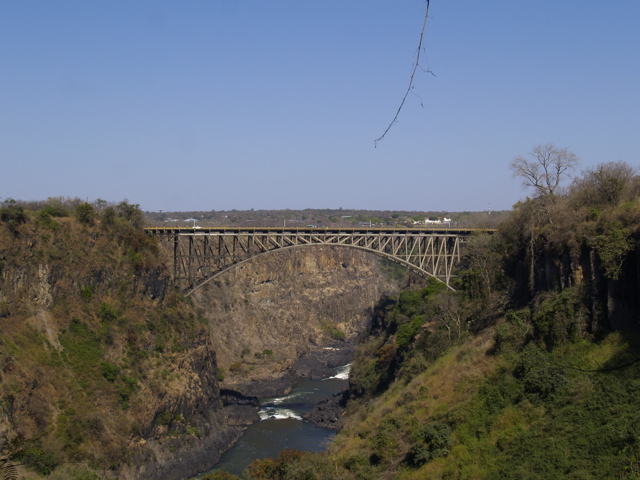
The land beyond, or on the south of the Falls, retains, as already remarked, the same level as before the rent was made.
[...]
The tops of the promontories are in general flat, smooth, and studded with trees. The first with its base on the east, is at one place so narrow, that it would be dangerous to walk to its extremity. On the second, however, we found a broad rhinoceros path and a hut; but, unless the builder were a hermit, with a pet rhinoceros, we cannot perceive what beast or man ever went here for. On reaching the apex of this second eastern promontory we saw the great river, of a deep sea-green colour, now sorely compressed, gliding away, at least 400 feet below us.
[...]
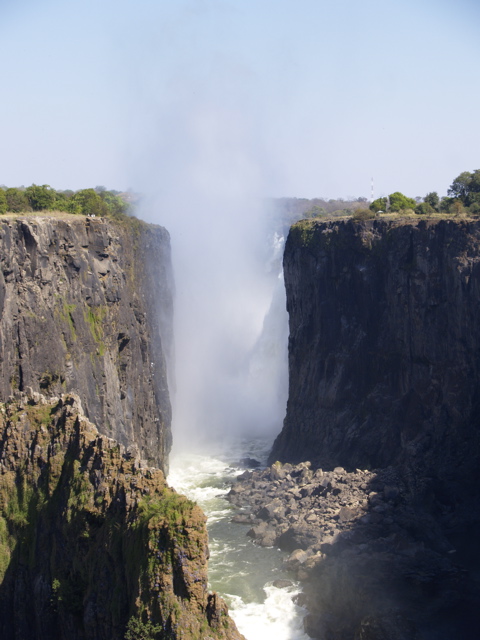
The whole body of water rolls clear over, quite unbroken; but, after a descent of ten or more feet, the entire mass suddenly becomes like a huge sheet of driven snow. Pieces of water leap off it in the form of comets with tails streaming behind, till the whole snowy sheet becomes myriads of rushing, leaping, aqueous comets. This peculiarity [...] happens, possibly from the dryness of the atmosphere, or whatever the cause may be which makes every drop of Zambesi water appear to possess a sort of individuality. It runs off the ends of the paddles, and glides in beads along the smooth surface, like drops of quicksilver on a table. Here we see them in a conglomeration, each with a train of pure white vapour, racing down till lost in clouds of spray. A stone dropped in became less and less to the eye, and at last disappeared in the dense mist below.
[...]
The morning sun gilds these columns of watery smoke with all the glowing colours of double or trable rainbows. The evening sun, from a hot yellow sky, imparts a sulphureous hue, and gives one the impression that the yawning gulf might resemble the mouth of the bottomless pit.
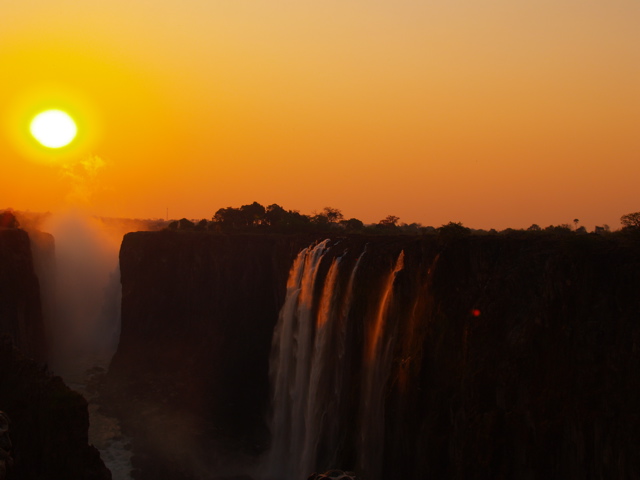
No bird sits and sings on the branches of the grove of perpetual showers, or ever builds its nest there. We saw hornbills, and flocks of little black weavers flying across from the mainland to the islands, and from the islands to the points of the promontories and back again, but they uniformly shunned the region of perpetual rain, occupied by the evergreen grove. The sunshine, elsewhere in this land so overpowering, never penetrates the deep gloom of that shade. In the presence of the strange Mosi-oa-Tunya, we can sympathize with those who, when the world was young, peopled earth, air, and river, with beings of not mortal form. Sacred to what deity would be this awful chasm and that dark grove, over which hovers an ever-abiding "pillar of cloud"?
David and Charles Livingstone: Narrative of an Expedition to the Zambesi and its Tributaries, 1858-1864, London 2001, S. 188-193
Makishi Story
Makishi which means the first black man to see the Victoria Falls around 1805-07.
This was the time when the bantu migration from the Lunda Kingdom (Kola) region. He was not a king but a warrior of the tribe called Leya.
These are the people who settled around the falls and they inherited the place.
This happened when the Leya people were defeated by Sekeletu. By then he was the King of the Lozi people formerly known as the Kololo. Makishi was sent to look for a green pasture where they could keep their cattle. Eventually he ended up seeing seeing very big smoke in the sky. He thought it was another attack from the Kololo people. By the time he reached the place he only found that it was a huge falling of water which he named Syeingu namutilima (which means a huge falling of water). Makishi was established through the patterns found on different culture materials, e.g. drums, masks, neck chains.
Erzählung eines Historikers an den Victoria Falls, zusammen mit einer Halskette erworben.
Schon wesentlich frueher hatten dort Khoisan-Gruppen gesiedelt (die aber nicht als "black men" gesehen werden, da sie wesentlich hellhaeutiger sind, und sich vom Aussehen und Kultur wesentlich von Bantu-staemmigen Gruppen unterscheiden), die Leya, von denen hier gesprochen wird, leben aber auch schon seit mehreren hundert Jahren da.
siehe: Wikipedia: Mosi-oa-Tunya

66
- 70

|
About
das ist ein selbstverwalteter fotoblog von ania, rob, folke, rh, inna und stw. mal schauen, ob wir nicht auch fotis präsentieren können, ohne dass für die "kostenlose nutzung" ab dem 200. posting 24.95$ im jahr an flickr geblecht und werbung geglotzt werden muss.
Slideshow
Letzte Einträge
Regenzeit12/17 16:32
Axolotl namens Calvin12/17 15:27
Lucky Luchs12/17 15:08
Viecher12/04 11:52
Vic Falls12/04 11:49
Politics11/25 13:35
Oshakati11/15 16:39
Mine10/24 18:39
Mine10/24 18:38
Mine10/24 18:37
Kommentare
Re: Regenzeitstw : 12/18 10:18
Re: Regenzeitrh : 12/18 09:05
Re: Regenzeitstw : 12/18 00:16
Re: Viecherstw : 12/17 15:11
Re: Oshakatirob : 11/20 10:21
Re: Oshakatistw : 11/18 13:09
Re: Oshakatistw : 11/18 13:06
Re: Oshakatistw : 11/18 13:03
Re: Minerh : 10/26 17:33
Re: Minestw : 10/25 17:57
Foto-Blogs
Gebrauchte Kameras
FotografInnen
Politische Fotografie
Gallerien und Sammlungen
Wikipedia
Texte
- Zur Ästhetik des Widerstands Gespräch mit Jörg Boström, Professor für Fotografie und Intermedia an der FH Bielefeld. Arbeiterfotografie Nr. 82
- Was Bilder beweisen - über die Funktion von Bildern im Krieg gegen Jugoslawien Andreas Neumann, August 2000, Arbeiterfotografie Nr. 88
- Der Informationskrieg Gegen-Informations-Büro
- Bilder, sagt man, lügen nicht - oder vielleicht doch? Thomas Deichmann, Weltwoche, 9.1.1997
- Einheimische zum Mitnehmen. Interview mit der Fotografin Marily Stroux über Rassismus in Bildern
- Urlaubsfotografie von Christiane Schurian-Bremecker
- Durch die Linse auf Distanz von Rosaly Magg
December 2007
| Sun |
Mon |
Tue |
Wed |
Thu |
Fri |
Sat |
|
|
|
|
|
|
|
1
|
|
2
|
3
|
4
|
5
|
6
|
7
|
8
|
|
9
|
10
|
11
|
12
|
13
|
14
|
15
|
|
16
|
17
|
18
|
19
|
20
|
21
|
22
|
|
23
|
24
|
25
|
26
|
27
|
28
|
29
|
|
30
|
31
|
|
|
|
|
|
Archiv
Syndicate this site (XML)
RSS/RDF 0.91

|


